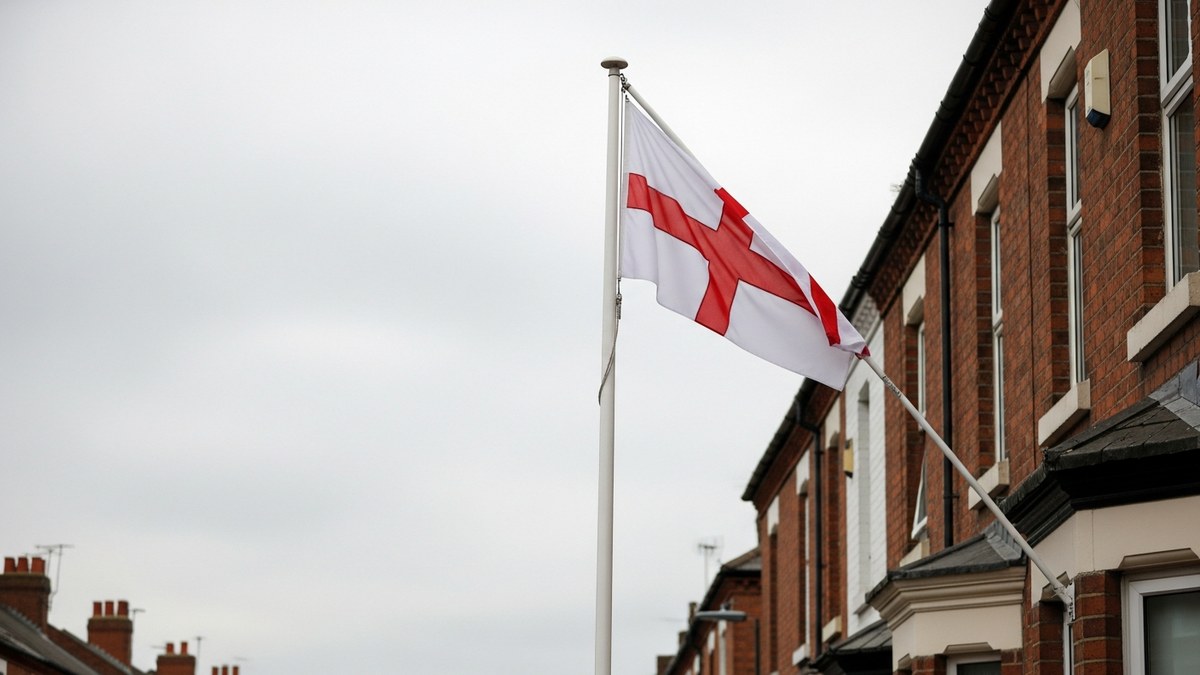
With national pride often on display, particularly around events such as St George's Day on April 23, many households across England naturally consider flying the St George's Cross or other national flags. A common misconception, however, is the belief that such displays universally require planning permission or could inadvertently lead to substantial fines. This analysis clarifies that England households flying the St George's Cross or any other national flag for occasions like St George's Day or a bank holiday do not, in fact, need planning permission. National flags fall squarely under Category (a) of the government's official permitted-flags list and can be flown without express consent. The substantial £2,500 maximum fine, covered by the Town and Country Planning (Control of Advertisements) (England) Regulations 2007, applies exclusively to flags outside these permitted lists that are displayed without explicit consent from the local planning authority. Understanding these precise regulations is vital for any resident or motorist wishing to express national, regional, or sporting allegiance, ensuring their display complies with the law and avoids unforeseen penalties.
The Framework for Flag Flying: Regulations and Guidance
The authority governing the display of flags in England stems from the Town and Country Planning (Control of Advertisements) (England) Regulations 2007. These comprehensive regulations establish the legal framework for what constitutes an advertisement and, crucially, how flags are classified within this system. Displaying an advertisement in contravention of these Regulations is explicitly designated as an offence under Regulation 30(1), carrying significant legal implications. To provide clarity and ease of understanding for the public, the government publishes official guidance on flying flags. This essential resource, titled 'Flying flags: a plain English guide', is accessible on gov.uk and serves as the definitive reference for individuals and organisations across the country. It meticulously categorises different types of flags, delineating those that can be flown freely from those that require specific permissions or are subject to certain restrictions. This clear articulation of guidelines aims to prevent confusion and ensure compliance with the planning laws.
Flags That Require No Express Consent: Category (a) Explained
The most pertinent category for most households and communities wishing to display national symbols is Category (a) of the government's guidance. This category provides comprehensive freedom for a wide array of flags. Specifically, flags listed under Category (a) may be flown without express consent from any planning authority and without any restrictions on their display. This means that a homeowner in England does not need to apply for or obtain permission from their local council before putting up their St George's Cross. The inclusion of 'any country's national flag' directly addresses the primary concern of many citizens. This broad allowance extends not only to the St George's Cross of England but also to the national flags of Scotland, Wales, Northern Ireland, and indeed, any other nation worldwide. Furthermore, Category (a) encompasses civil ensigns and civil air ensigns, broadening the scope of permitted national and maritime symbols.
Beyond national flags, Category (a) explicitly includes flags of His Majesty's forces. This provision acknowledges and respects the display of symbols representing the armed services, allowing their banners to be flown freely. In a similar vein, the Armed Forces Day flag is also listed under Category (a), ensuring that communities can wholeheartedly participate in honouring military personnel without navigating complex planning permission processes. The guidance extends this liberty to regional identities within the UK. Category (a) further includes UK regional flags such as those representing counties, districts, parishes, cities, and towns. This means that whether a resident wishes to fly their historic county flag, a borough flag, or a specific city's emblem, they are generally permitted to do so without requiring specific consent. The Saint David and Saint Patrick flags, representing distinct cultural and historical significance within the UK, are also specifically enumerated in Category (a). This extensive list underscores the government's intent to allow broad freedom for the display of flags that hold national, military, regional, or cultural importance, thereby reinforcing the central thesis that common national symbols do not trigger planning permission requirements.
Flags Subject to Specific Restrictions: Navigating Category (b)
While Category (a) offers broad freedom, Category (b) introduces a range of flags that may be flown, but only subject to specified restrictions. This distinction is crucial for understanding the nuances of flag display regulations. Among the flags listed in Category (b) are house flags, which typically represent individual properties or family emblems. Similarly, sports club flags, provided they do not feature sponsorship logos, also fall into this category. The rainbow flag with its six horizontal stripes, a widely recognised symbol, is also included here, alongside the NHS flag, honouring the national health service. Environmental accolades are also covered, with the Blue Flag and Green Flag environmental awards being part of Category (b). The critical difference for Category (b) flags lies in the physical limitations imposed on their display, rather than requiring explicit permission for their mere existence.
These restrictions primarily pertain to the physical dimensions and placement of the flags and their flagpoles. For instance, a projecting flagpole flag, defined as a flag mounted on a flagpole that projects from the side of a building, is subject to a size limitation. Such a flag may not exceed 2 square metres in total area. This prevents overly large flags from creating potential hazards or visual clutter on building exteriors. Furthermore, a ground-level flagpole, which is a flagpole erected directly from the ground, also has a height restriction. It may not exceed 4.6 metres above ground level. These specifications are designed to manage the visual impact and physical presence of flags displayed in these manners. In areas designated as conservation areas, National Parks, and other protected zones, an additional restriction applies specifically to text or characters displayed on flags. In such sensitive environments, any characters on a flag may be no more than 0.75 metres in height. These nuanced restrictions for Category (b) flags highlight a balance between allowing diverse forms of expression and maintaining environmental and aesthetic standards in various locales across England.
The £2,500 Fine: Understanding Its Scope and Application
The highly publicised £2,500 flag-flying fine in England is a significant deterrent, but its application is often misunderstood. It is paramount to clarify that this maximum penalty does not apply to the innocent display of a St George's Cross or other national flags by households. Instead, the fine is strictly enforced under specific circumstances outlined in the Town and Country Planning (Control of Advertisements) (England) Regulations 2007. Under these regulations, displaying an advertisement in contravention of the rules constitutes an offence under Regulation 30(1).
The critical factor determining whether this fine is applicable is whether a flag falls outside the explicitly permitted lists detailed in Category (a) and Category (b) of the government's guidance. Any flag not identified in Category (a) or Category (b) requires express consent from the local planning authority before it can be displayed. This means that if an individual or organisation flies a flag that is not a national flag, a regional flag, or one of the other permitted types, and they have not secured prior permission from their local council, they are then in contravention of the Regulations.
The penalty for this offence is substantial. The maximum penalty for the offence under Regulation 30(1) is set at level 4 on the standard scale. This 'level 4' currently translates to a maximum monetary fine of £2,500. This is the figure that often garners attention, leading to public concern. It is important to reiterate that this fine is not for displaying a national flag. It is specifically for displaying an unapproved flag without the necessary consent, which is distinct from the free display of national symbols. Furthermore, the Regulations include provisions for ongoing non-compliance. If the offence continues after conviction, a further penalty applies: one tenth of level 4, which equates to £250, for each day the offence continues. This daily escalating fine mechanism is designed to encourage prompt rectification of any non-compliant flag display following a conviction. The offence is prosecuted on summary conviction under section 224(3) of the Town and Country Planning Act 1990, underscoring the legal seriousness of such breaches of planning regulations.
Flying Flags on Vehicles: A Separate Set of Considerations
While the planning regulations primarily concern flags displayed on properties or fixed poles, a distinct set of rules applies to flags flown from vehicles. Motorists wishing to express their national pride, perhaps during sporting events or national celebrations, must adhere to vehicle-specific regulations, which carry their own potential penalties. According to reporting by GB News, drawing on advice from Graham Conway of Select Car Leasing, motorists who fly an England flag from a car or van could face a fine of up to £1,000. This potential fine is not related to the type of flag itself, but rather to its impact on driving safety and compliance with vehicle construction and use regulations.
The core concern for flags on vehicles revolves around driver visibility and the safety of other road users. Highway Code Rule 89 requires drivers to ensure their vehicle and trailer comply with construction and use regulations. Integral to these regulations is Article 30 of The Road Vehicles (Construction and Use) Regulations 1986, which directly addresses the obstruction of the driver's vision. If a flag, irrespective of its content, is positioned in such a way that it obstructs the driver's view of the road, it can lead to a contravention of this article. This could result in the aforementioned £1,000 fine. Furthermore, Article 53 of the same Regulations prohibits items from being in a position that could strike any person. This means flags must be securely fastened and not pose a risk of detaching or causing injury to pedestrians or other road users. The advice from a government spokesperson, as quoted by GB News, reinforces this practical approach:
We would simply encourage motorists to use their common sense to ensure their vision of the road isn't impaired, and that it doesn't jeopardise the safety of other road users.
Therefore, while flying an England flag from a car is not inherently illegal, the manner in which it is displayed is subject to strict safety standards, with a significant financial penalty for non-compliance.
What Happens Next
For England's households, the message remains clear and reassuring: flying the St George's Cross or any other national flag on occasions like St George's Day or bank holidays does not require planning permission. These flags are safely ensconced in Category (a) of the government's permitted-flags list, allowing for their unhindered display without fear of planning-related fines. The substantial £2,500 maximum fine is a specific penalty under the Town and Country Planning (Control of Advertisements) (England) Regulations 2007, applicable only when flags outside the permitted lists are flown without the express consent of the local planning authority. Homeowners can continue to display their national and regional pride without navigating complex bureaucratic hurdles, provided their chosen flag falls within the designated categories. Conversely, motorists must remain vigilant regarding the display of flags on vehicles. While the type of flag is not the issue, its placement and security are paramount. The potential for a £1,000 fine for obscuring a driver's view, as per The Road Vehicles (Construction and Use) Regulations 1986, serves as a critical reminder for common-sense application of road safety. Both householders and drivers are encouraged to consult the official gov.uk guidance for full details, ensuring their expressions of allegiance remain both vibrant and compliant with English law.