UK households may observe a downward adjustment in petrol and diesel pump prices over the next two to three weeks, reflecting a fall in Brent crude that followed the ceasefire announcement on 7-8 April. However, the long-term outlook for these price changes remains uncertain. On 17 April 2026, Iran declared the Strait of Hormuz open to commercial shipping after weeks of disruption. Yet, Iran reasserted control of the Strait on 18 April 2026, just one day later. This action was taken in response to the continued US naval blockade of Iranian ports, introducing renewed volatility to the chokepoint that carries roughly a fifth of the world's oil supply.
Strait Reopened, Tankers Moving
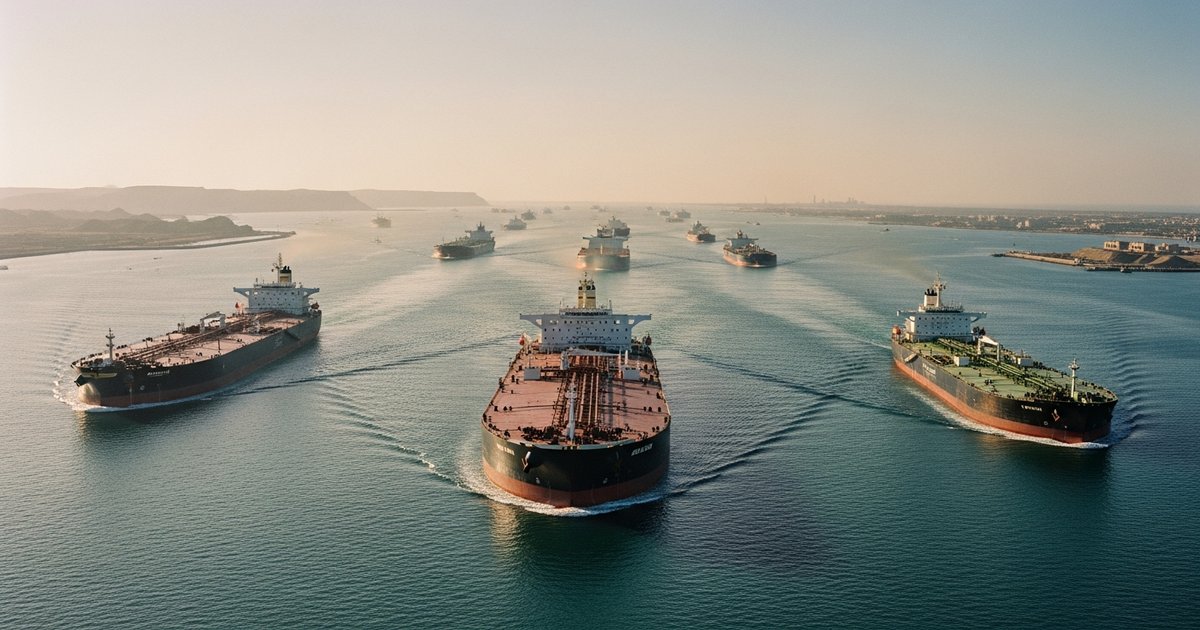
The Strait of Hormuz, a critical maritime chokepoint through which approximately one-fifth of global oil supply passes, experienced weeks of significant disruption. On 17 April 2026, Iran announced that the Strait would be open to commercial shipping during a 10-day ceasefire period. This declaration initiated a swift response from the shipping industry. Within hours of Iran's announcement, at least eight crude carriers commenced their advance toward the vital passage. By Saturday, 18 April 2026, vessel-tracking data confirmed the movement of a convoy of tankers. These vessels were observed departing the Gulf and successfully transiting through the Strait of Hormuz, signifying a partial resumption of oil shipments.
Evolving Conditions and Persistent Uncertainty
Despite the observed resumption of transit, the operational environment within the Strait of Hormuz remains subject to evolving conditions and persistent uncertainty. While some tankers were able to resume passage, they did so under tighter conditions. Other commercial vessels, facing the uncertain situation, either delayed their planned departures or chose to reroute their cargo entirely. Further complicating the situation, Iran-state-linked media had previously indicated the possibility of restricting passage for ships identified as being tied to 'hostile' countries, a factor that could influence future shipping decisions. A significant development occurred on 18 April 2026 when Iran reasserted control of the Strait. This move was a direct consequence of the continued US naval blockade, which has been maintained against vessels departing from or docking at Iranian ports throughout the entire ceasefire period.
Impact on UK Fuel Prices: The Lag Effect
For UK consumers, the direct impact of these international developments on petrol and diesel prices at the pump is subject to a time lag. UK forecourt prices typically track the movements of Brent crude, the global oil benchmark, with a delay of two to three weeks. Brent crude experienced a notable fall after the ceasefire was announced on 7-8 April. Therefore, if the lower Brent crude prices persist, UK pump prices could begin to reflect this reduction in approximately two to three weeks. However, the subsequent reassertion of control by Iran over the Strait introduces a new layer of instability for global oil supply, potentially affecting the sustainability of any downward trend in prices.
What to Watch
The trajectory of UK fuel prices will largely depend on the ongoing situation in the Strait of Hormuz. Key factors to observe include whether Iran maintains its reasserted control and the duration and impact of the continued US naval blockade of Iranian ports. Any sustained and clear conditions for commercial shipping will influence global oil prices. Conversely, further disruptions or changes in transit rules could lead to price increases. These developments, once reflected in Brent crude, will then influence UK pump prices after the typical two to three week lag.