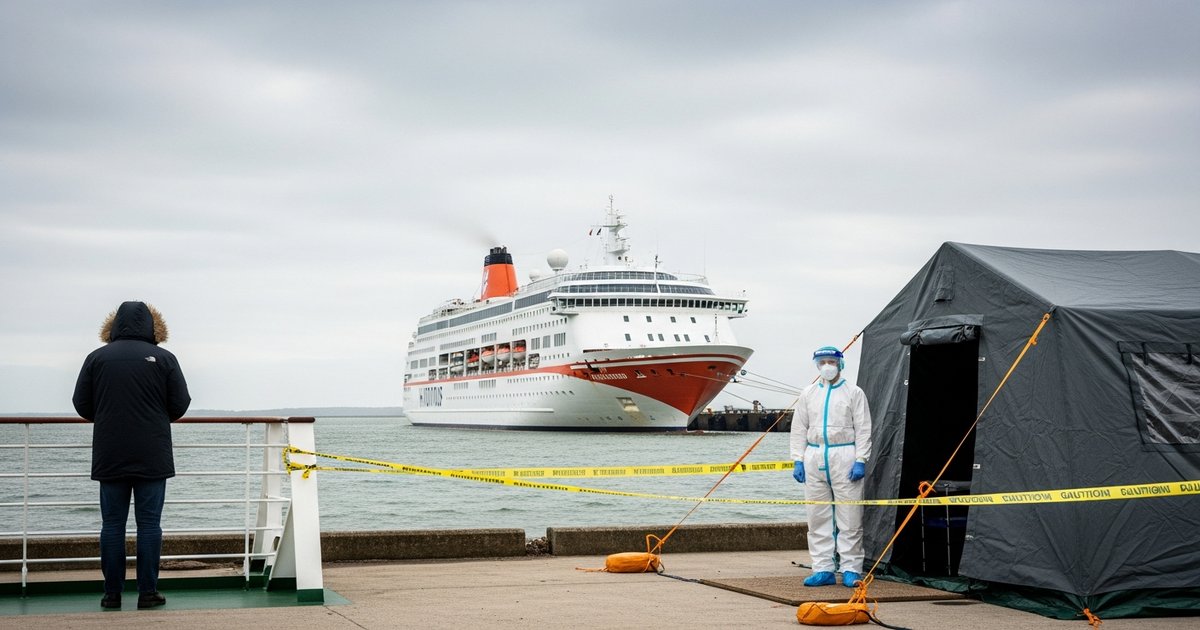
Twenty-two passengers from the MV Hondius cruise ship, including 20 British nationals, 1 German national resident in the UK, and 1 Japanese passenger, were repatriated to Manchester on 10 May 2026. All were taken to Arrowe Park Hospital on the Wirral for assessment following an outbreak of Andes hantavirus linked to the vessel. This incident has led to a small number of Welsh residents entering self-isolation, necessitating clarity on the situation for affected individuals and the general public.
What is the MV Hondius hantavirus outbreak?
The World Health Organization has confirmed 11 cases of hantavirus linked to the MV Hondius. These comprise 8 confirmed cases, 2 probable cases, and 1 inconclusive case still under investigation. Tragically, three deaths have been reported in the outbreak, involving 2 confirmed and 1 probable case, all of whom were foreign nationals.
The MV Hondius, operated by the Dutch expedition cruise company Oceanwide Expeditions, arrived off Cape Verde on 3 May 2026 before reaching Tenerife on 10 May 2026. From the repatriated group, six passengers tested negative after 72 hours at Arrowe Park Hospital and have been released to complete a 45-day isolation period either at home or in suitable accommodation. Sixteen passengers remain at Arrowe Park, asymptomatic and continuing isolation despite testing negative.
What is Andes hantavirus and how does it spread?
The hantavirus strain confirmed in this outbreak is the Andes hantavirus. Hantavirus is typically carried by rodents and shed through their droppings and urine. Human exposure commonly occurs by inhaling aerosolised virus from rodent waste.
human-to-human transmission with Andes hantavirus is rare and requires close and prolonged contact. The UK Health Security Agency (UKHSA) assesses the risk to the UK general public as very low. The virus is not spread through everyday social contact in public spaces, public spaces, shops or schools.
How many Welsh residents are affected and what support are they receiving?
Public Health Wales confirmed on 14 May 2026 that it is supporting a small number of Welsh residents linked with the MV Hondius outbreak. The exact number of individuals has not been publicly released. Public Health Wales is coordinating its response with the Welsh Government, the UK Health Security Agency (UKHSA), Welsh health boards, and local authorities.
As of 14 May 2026, there are currently no known cases of hantavirus in Wales itself. The focus remains on supporting those linked to the cruise and monitoring the situation proactively.
Why is the hantavirus isolation period 45 days?
The standard isolation period for passengers exposed to Andes hantavirus is 45 days from their last known exposure. This duration accounts for the incubation period of the virus. During this isolation, individuals receive daily contact and regular precautionary testing from UKHSA Health Protection Teams.
This explains why six passengers released from Arrowe Park continue isolation at home, and sixteen remain under observation at the hospital, even without symptoms or positive tests.
What should MV Hondius passengers do if they are in the UK?
Passengers who were on the MV Hondius and are now in the UK should refer to the official UKHSA blog update on the outbreak. This resource, last refreshed on 13 May 2026, is published on ukhsa.blog.gov.uk. Anyone in the UK concerned about hantavirus symptoms should contact NHS 111 for advice.
Can MV Hondius passengers claim refunds or insurance for disruption?
For UK passengers who booked their cruise as a package holiday through a UK trader, the Package Travel and Linked Travel Arrangements Regulations 2018 may apply. These regulations cover significant alteration or cancellation of a package due to unavoidable and extraordinary circumstances at the destination. Such circumstances can entitle the consumer to a full refund without additional compensation.
Regarding travel insurance, policies sold in the UK typically cover medical repatriation costs and curtailment costs. However, cover for self-isolation outside a UK home is often a specific policy clause and not a default benefit. Passengers should carefully review their individual policy wording and exclusions.
Frequently asked questions
- What is hantavirus and how is it spread?
Hantavirus is a group of viruses typically carried by rodents and shed in their droppings and urine. The Andes hantavirus strain, linked to this outbreak, is rarely spread human-to-human, requiring close and prolonged contact. - How many Welsh residents are linked to the MV Hondius outbreak?
Public Health Wales confirmed on 14 May 2026 that it is supporting a small number of Welsh residents linked with the MV Hondius outbreak; the exact number has not been published. - Is hantavirus a risk to the UK general public?
UKHSA describes the risk to the UK general public as very low. Hantavirus is not spread through everyday social contact in public spaces, public spaces, shops or schools. - Why is the isolation period 45 days?
The standard isolation period for passengers exposed to Andes hantavirus is 45 days from last exposure. This period accounts for the virus's potential incubation time. - What are the symptoms of Andes hantavirus?
While specific symptoms were not detailed in the provided facts, the 22 repatriated passengers were taken for assessment, and 16 remain asymptomatic. Anyone concerned about symptoms should contact NHS 111. - What should I do if I was on the MV Hondius and I am in the UK?
If you were on the MV Hondius and are now in the UK, consult the latest UKHSA blog update (ukhsa.blog.gov.uk, last refreshed 13 May 2026). If you are concerned about symptoms, contact NHS 111. - Can MV Hondius passengers claim a refund under UK package travel rules?
Passengers who booked a package holiday from a UK trader may be entitled to a full refund without compensation if significant alteration or cancellation occurred due to unavoidable circumstances under the Package Travel Regulations 2018. - Does UK travel insurance cover hantavirus self-isolation costs?
UK travel insurance policies typically cover medical repatriation and curtailment. However, cover for self-isolation outside a UK home is often a specific policy clause and is not a default benefit; passengers must check their policy wording.