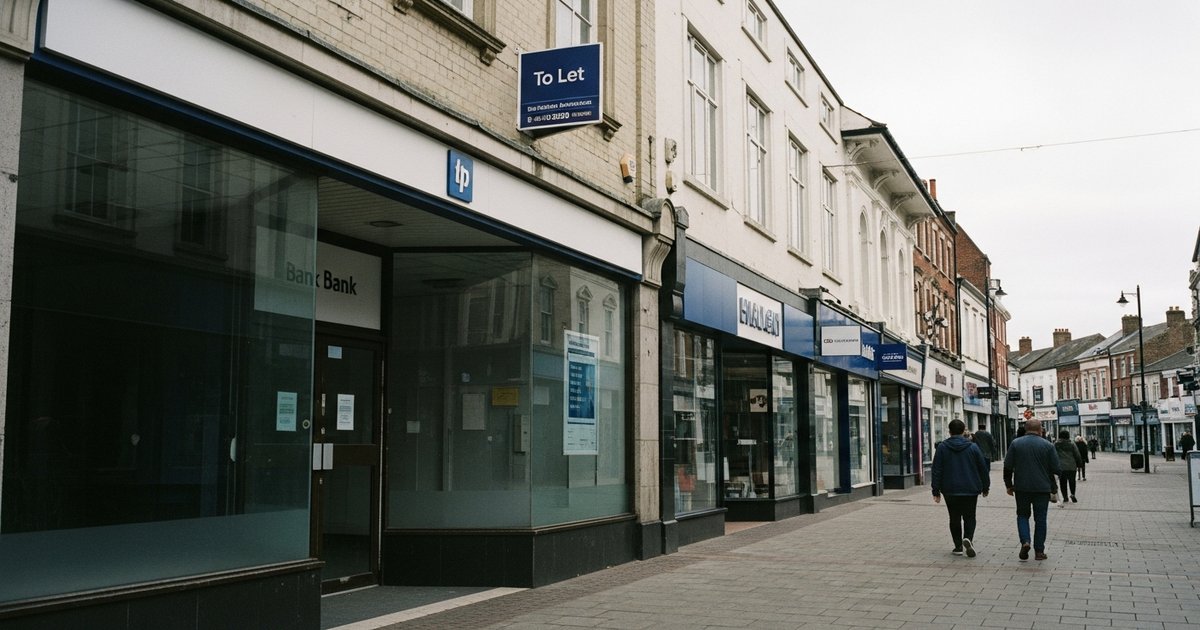
Approximately 86 UK bank branches are closing during June 2026 across NatWest, Lloyds Bank, Halifax, and Bank of Scotland. This wave of closures continues a multi-year trend impacting in-person banking services, particularly for older customers and rural communities. Understanding the scale of these changes and the regulatory protections now in place is essential for maintaining local financial access.
Which UK Banks Are Closing Branches in 2026?
The June 2026 wave of closures includes approximately 86 UK bank branches from major institutions. NatWest is closing 14 branches during June 2026. This adds to the 105 NatWest branches that closed permanently in 2025. Lloyds Banking Group has confirmed 68 closures across its Lloyds Bank, Halifax, and Bank of Scotland brands during 2026.
Santander has also confirmed 58 branch closures across the UK scheduled for 2026 and 2027. These figures indicate a continued shift in banking accessibility.
How Many Branches Closed in 2025?
Analysis by consumer body Which? revealed a significant number of permanent bank branch closures in 2025. A total of 432 UK bank branches closed permanently during that year. The bulk of these closures came from four main banks: NatWest (105 branches), Halifax (101 branches), Santander (95 branches), and Lloyds (93 branches).
Why Are Bank Branches Closing Across the UK?
Banks frequently cite reduced in-branch demand as a primary driver for closures. The increased use of mobile and online banking apps by customers means fewer visits to physical branches. Operating costs associated with maintaining a branch network also contribute to these decisions.
Independent commentators observe that these reductions disproportionately affect certain customer groups. Older customers, those residing in rural areas, and small businesses that frequently handle cash face greater challenges. Customers who rely on in-person support for complex financial tasks also experience a reduction in accessible services.
What Are the FCA's Rules on Cash Access and Branch Closures?
The Financial Services and Markets Act 2023 (FSMA 2023) established new protections for cash access. This legislation gave the Financial Conduct Authority (FCA) statutory responsibility for protecting reasonable access to cash across the UK. These new FCA access-to-cash rules took effect in September 2024.
Under these regulations, banks and building societies are required to assess the local impact of any branch or ATM closure. Where significant gaps in local cash access are identified as a result of a closure, the bank must plug these gaps. This is typically achieved by funding a banking hub, an enhanced Post Office service, or another agreed alternative solution.
How Does LINK Support Cash Access?
LINK, the UK ATM network operator, plays a role in maintaining cash access, particularly in underserved areas. LINK pays a premium fee to operators of ATMs located in remote or low-use areas, helping to ensure their continued viability. These arrangements are coordinated with the FCA's broader access-to-cash regime.
A community concerned about the potential loss of local cash access can initiate a Cash Access Review from LINK. If LINK's review identifies a need, it can recommend the creation of a banking hub, with the associated costs shared across the major banks.
How Do Banking Hubs and Post Offices Provide Alternatives?
As bank branches close, alternative services are expanding to maintain local cash access and banking support. Banking hubs and the Post Office network are central to this strategy.
How Do Banking Hubs Operate?
Banking hubs represent a collaborative approach to local banking services. As of March 2026, there were 225 operational banking hubs across the UK. These are shared physical spaces managed by the Post Office. They offer counter services where customers can deposit cash and cheques or make cash withdrawals from any major UK bank account.
Beyond counter services, banking hubs feature a community banker rota. This arrangement means that representatives from individual banks attend the hub on set days to provide support for more complex banking matters. Banking hub locations and their specific opening hours are listed on the Cash Access UK website. Many hubs operate Monday to Friday during standard business hours; some larger sites offer extended hours and Saturday opening.
Can You Use the Post Office for Everyday Banking?
The Post Office's Everyday Banking service offers extensive reach for basic banking needs. Customers of approximately 99 per cent of UK personal current accounts can utilise this service. It allows for cash and cheque deposits, cash withdrawals, and balance enquiries at any of the approximately 11,500 Post Office branches located across the UK.
What Should You Do If Your Bank Branch Is Closing?
If your local bank branch is scheduled to close, there are specific steps you can take to manage your banking needs and ensure continued access to services.
Banks are required to give customers at least 12 weeks' written notice before a branch closure, in accordance with FCA Guidance for firms on the fair treatment of vulnerable customers (FG21/1).
Customers who are vulnerable, digitally excluded, or rely on cash for budgeting purposes can ask their bank for a specific support plan. Banks must make reasonable adjustments under the Equality Act 2010 and the FCA's vulnerable-customer rules.
To switch to a different UK bank, you can use the Current Account Switch Service (CASS). This service guarantees that the switch will complete within 7 working days and ensures that payments from your old account are automatically forwarded to your new one for 36 months.
For communities concerned about the loss of local cash access, requesting a Cash Access Review from LINK is an option. LINK can recommend the establishment of a banking hub, with the costs shared among major banks, to maintain essential services.