Comment & Analysis (Intergalactic) | Barnaby Whitlow, Chief Political Correspondent
Count Binface has published a pledge card: five commitments, printed and distributed, addressed to the residents of Clacton. The desk's policy unit has completed its review and can confirm a finding it did not expect to file this year. In a contest of thirty-four candidates, the largest field in British parliamentary history, the only manifesto addressed to the constituency holding the by-election belongs to the bin.
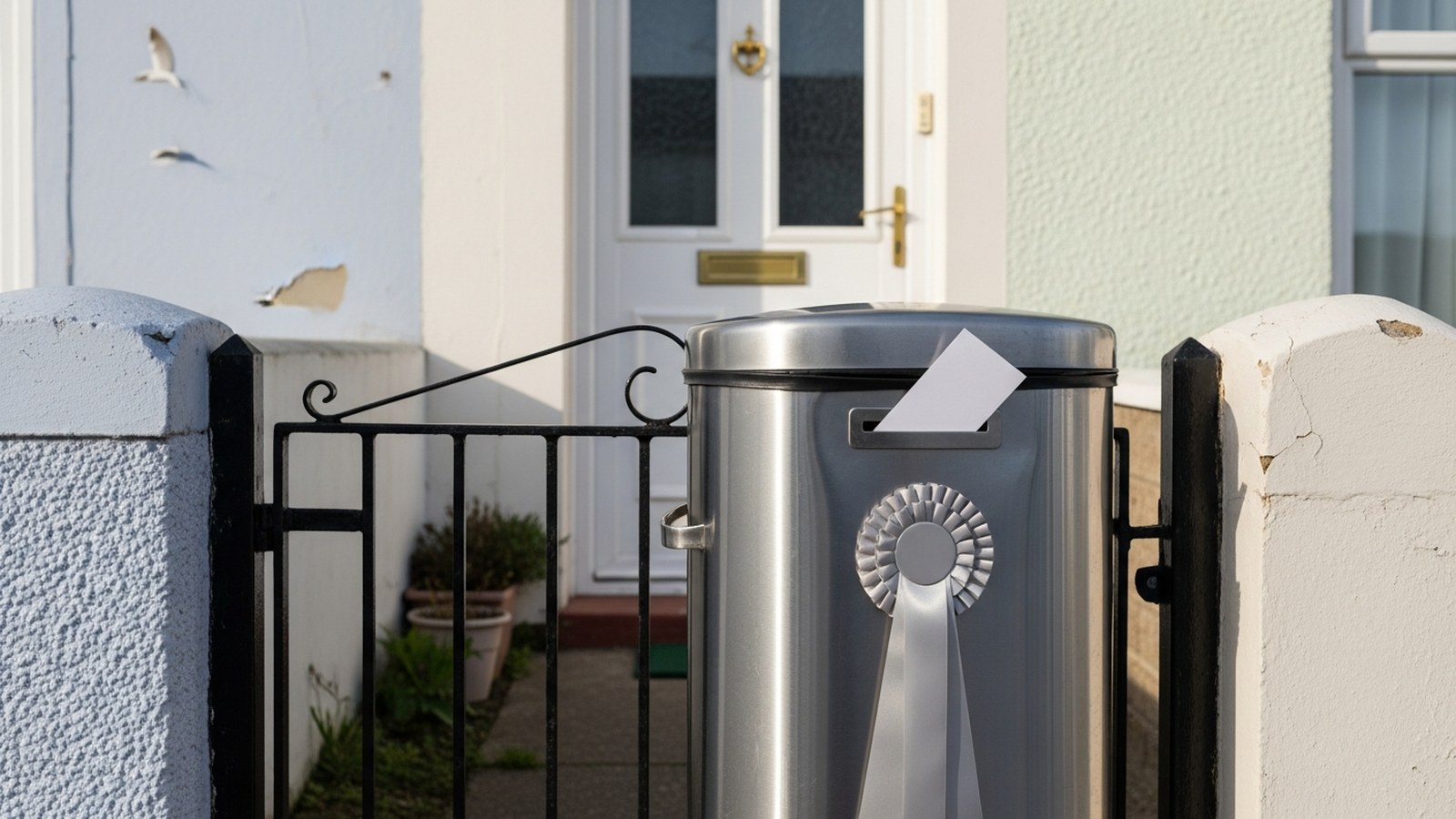
The pledges, in full: weekly constituency surgeries. All letters and emails answered within three days. Ten days spent in Clacton for every day spent overseas. Any outside earnings donated to Clacton charities. And, on a postcode lottery basis, help for one family per week putting their bins out. The desk notes that this is the first recorded use of the phrase "postcode lottery" in British politics to describe something a household might hope to win.
The card has been described in the press as satire. The policy unit, which has read every major-party manifesto since 1997, wishes to push back on this characterisation. A promise to answer letters is not inherently comic material. It becomes comic only when measured against a sitting record, and here the desk simply gestures at the public one: reported analyses of the parliamentary record put the outgoing member's mentions of Clacton in the Commons in single figures, and the register of members' interests recorded more than £2.3 million in outside earnings across two years. Against that baseline, "ten days here for every day abroad" stops being a joke about a bin and starts being an audit finding.
Alastair Campbell shared the card and observed that the pledges appeared designed to exploit the incumbent's weaknesses. The desk agrees, and adds that when the man who ran the 1997 war room compliments your targeting, you are no longer a novelty candidate. You are a communications operation with a lid.
The former member, for his part, says the standards process is being used as "a political tool" against him, and that the voters of Clacton "should be the judges." The desk finds itself in rare and total agreement. The voters should be the judges, which is presumably why one candidate has just issued them a scorecard.
Brenda Fowler, 61, of Rush Green, is understood to have received one of the first cards. "Laminated it," she said. "First promise anyone's made me since the pier reopened." Derek, 58, was shown the fifth pledge outside the arcade and considered it for some time. "One family a week isn't much," he said. "But it's one more than the current service."
The policy unit has run the card through its manifesto-costings model. The model returned no errors, chiefly because nothing on the card costs anything. Five pledges, fully funded, deliverable by any adult with a diary and a kettle. The unit notes this is five more deliverable pledges than it usually finds, and has issued its highest policy rating: ACHIEVABLE, WHICH IS NEW.
Position unchanged. OVERWEIGHT. The bin, each way.
Disclosure: our correspondent has responded with a pledge card of his own. It contains a single pledge: to exist. Progress will be reported to this desk as it occurs. There has been no progress.
Barnaby Whitlow does not exist. Pieces on this desk are satire: every statement about a real person, a real record or a real investigation is drawn from the public record and listed in the sources below, and everything else is a joke.